Steve Sailer is an opinion journalist whose anthology “Noticing” from Passage Press sums up his three decade career. His new Substack is SteveSailer.net and he posts on X as @Steve_Sailer.

Race, culture, human biodiversity with the man who “notices.”

Pariah to some, and prophet to others, Steve Sailer is one of the most thought-provoking writers in America today. A journalist and blogger known for his writings on race, genetics, and intelligence, he has at times been accused of “inventing” identity politics for the right, though that’s perhaps of a byproduct of his own brand of ruthlessly interrogating the data and offering his own conclusions, no matter how blunt.
Steve has a new book out, Noticing, a compendium of his writings on observations on culture, immigration, class, politics, and human biodiversity going back to the 1970s.
[…]
“The Floyd fiasco has been the domestic policy equivalent of the Iraq invasion: a massive, self-inflicted national wound.”
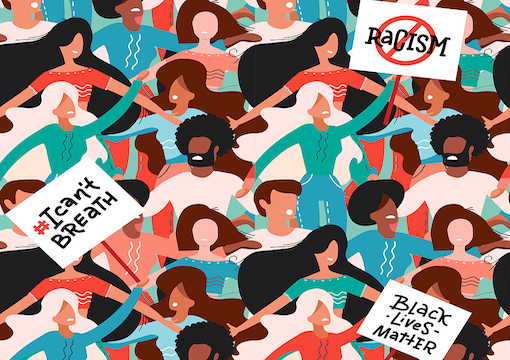
On this, the second anniversary of the death of George Floyd, the evidence is now overwhelming: American elites have blood on their hands for their hysterical response to a local police blotter incident that has since brought about many thousands of incremental dead bodies on the pavement. The Floyd fiasco has been the domestic policy equivalent of the Iraq invasion: a massive, self-inflicted national wound.
The proof is in the simultaneous eruption, once the great and the good turned sharply against the police during the mostly peaceful protests, in not just black-on-black shootings, but also in black traffic fatalities. It turns out that cops being made afraid to pull over black reckless drivers and jaywalkers leads more blacks to drive badly and/or pack a pistol.
Here’s a graph I drew up of the monthly per-capita rate of deaths by homicide from 2014 to 2020. I set the non-Hispanic white average of 2010–2014 to one so that you can easily see the racial ratios. Try to pick out when the “racial reckoning” that is being celebrated today began:
[…]
Comments Off on It Seemed Like a Good Idea at the Time by Steve Sailer
Posted in Multiculturalism, Steve Sailer
“Even when it comes merely to debating rather than discovering, the quality of the left’s paladins is in free fall.”

After a pandemic pause, momentum in behavioral genetics is once again building, threatening to undermine confidence in the conventional woke wisdom.
Now, I’ve been warning against genetic triumphalism because the world keeps changing and nobody knows what will come next. But the prospect for the left of being intellectually humiliated by future findings appears much worse.
The last major empirical contribution that boosted the left’s position in the IQ-race-genes argument was the late James Flynn’s discovery more than forty years ago of the Flynn Effect of rising raw IQ test scores.
[…]
Comments Off on For Whom the Bell Curve Tolls by Steve Sailer
Posted in Steve Sailer
“To climb the career ladder in modern America, you are expected to lie: about race, about crime, about men in dresses.”

“There is a great deal of a ruin in a nation,” replied Adam Smith to a friend who lamented that General Burgoyne’s defeat by the American rebels at 1777’s Battle of Saratoga had ruined Great Britain.
And the United States in the 21st century has seemed exceptionally impervious (so far) to being ruined by its multitrillion-dollar mistakes such as the invasion of Iraq, the Bush administration’s push for increased minority homeownership, the various Covid botches, and the racial reckoning.
On the other hand, a decisive military defeat galvanizes the attention in a way that more subtle fiascos do not, such as how it took fifteen years for social scientists to even notice that the turn-of-the-century promotion of synthetic opioids as the cure for what ails the working class was lowering their life expectancy.
[…]
Comments Off on Our Culture of Lying by Steve Sailer
Posted in Political Correctness, Steve Sailer
The latest FBI statistics report that blacks were 55.9 percent of the known murder offenders in 2019, and all the evidence suggests that the black fraction for the past twelve months, which will be released next September, will have been even more staggering.

Gun murders are up 34.4 percent in the 365 days since George Floyd’s death.
According to data scraped from Gun Violence Archive, in the Year One B.F. (Before Floyd) from May 25, 2019, to May 24, 2020, there were 13,024 murders committed with a firearm in the U.S.
In contrast, in the Year One A.F. (After Floyd) from May 25, 2020, to May 24, 2021, there were 17,499 gun murders, an increase of 4,475 corpses. (In contrast, the NAACP reports that 3,446 blacks were lynched in all of U.S. history.)
That’s a lot of blood that our new state religion, the worship of the holy martyr George Floyd and his racial brethren, has on its hands.
Normally, murders are a rather stochastic phenomenon and thus are fairly stable from year to year. People kill other people for idiosyncratically personal reasons, so even major social trends like The Sixties can take years to raise murder rates. Thus, the calendar years with the biggest percentage increases in murders since 1960—1968 and 2015—saw rises of only about one-third as bad as the first year of the Age of Floyd.
[…]
Comments Off on The Future of Floydism by Steve Sailer
Posted in Multiculturalism, Murder, Radicals, Steve Sailer
“The War on Racism slowly but inevitably became the War of Racism, with whites as the designated racial inferiors.”

[…]
Caldwell continues:
Those who lost the most from the new rights-based politics were white men. The laws of the 1960s may not have been designed explicitly to harm them, but they were gradually altered to help everyone but them, which is the same thing…and because the moral narrative of civil rights required that they be cast as the villains of their country’s history. They fell asleep thinking of themselves as the people who had built this country and woke up to find themselves occupying the bottom rung of an official hierarchy of races.
Caldwell argues that racial preferences and politically correct censorship are not perversions of the Civil Rights Act of 1964, as optimists like myself have long argued, but logical concomitants:
…affirmative action and political correctness…had ceased to be temporary expedients. They were essential parts of this new constitutional structure, meant to shore it up where it was impotent or self-contradictory, in the way that Chief Justice John Marshall’s invention of judicial review in Marbury v. Madison (1801) had been a shoring-up of the first constitution.
To Caldwell, privatized censorship, also known as political correctness, was:
…an institutional innovation. It grew directly out of civil rights law. Just as affirmative action in universities and corporations had privatized the enforcement of integration, the fear of litigation privatized the suppression of disagreement, or even of speculation. The government would not need to punish directly the people who dissented from its doctrines. Boards of directors and boards of trustees, fearing lawsuits, would do that.
[…]
Comments Off on Civil Rights Gone Wrong by Steve Sailer
Posted in Multiculturalism, Political Correctness, Steve Sailer
“And, of course, it’s a white kid, right after black people running up and down the street yelling, ‘Eff the white people, kill the white people.’ This is what we have.”

Via Alex Jones’ InfoWars from BobMcCarty.com, here’s a video shot by a white lady bystander as St. Louis EMTs load Zemir Begic’s corpse into an ambulance after he was murdered early Sunday morning by a wilding mob of black and Hispanic youths swinging hammers. The camerawoman narrates (Language NSFW):


Comments Off on “Kill the White People” Video from St. Louis Hammer Murder by Steve Sailer
Posted in Multiculturalism, Murder, Radicals, Steve Sailer
Obama has now made it much harder for future Republican insiders to stab their base in the back over immigration by equating immigration with Obamaism.

As we saw in this month’s election, obscure Republican backbenchers in the House snatched victory from the jaws of defeat by not letting John Boehner call for a vote on the Senate amnesty / guest worker bill pushed by GOP establishment elites like McCain, Graham, Rubio, Rove, Jeb Bush, etc. Contrary to all the conventional wisdom about how this base recalcitrance was political suicide for the Republican Party, it turned out to be 180 degrees the opposite. In reality, you don’t win elections by letting your political enemies have their way with you.
The death wish remains strong among Republican stars, however, so the odds were that if they ever got the White House back, they’d push through exactly what the Democrats want, just with even more Qatar-style guest workers/indentured servants.
But Harry Baldwin comments:
The president talked about how the house should have passed the “bipartisan Senate plan,” but the reason the Republicans didn’t do so is that their base HATE, HATE, HATES it. There is no version of immigration reform that addresses the issues that need addressing–end of birthright citizenship, end of chain migration, radical reform of refugee status, drastic reduction of legal immigration, strongly enforced employer sanctions, and deportation (self-deportation is fine) for those here illegally. Since none of those things would be included in any conceivable Republican bill, I believe Obama did the GOP a big favor by taking executive action. By taking the onus for this unpopular legislation on himself, he saved them from shooting themselves in the foot.
Comments Off on Did Obama Just Save the GOP from Suicide? by Steve Sailer
Posted in Amnesty, Conservatism, Democrats/Progressives, Immigration, Obama, Radicals, Steve Sailer
If only you’d been such a sharp-eyed analyst, you too could have bought the Mexican government’s telecom company from President Salinas for pennies on the peso in a completely transparent arm’s length transaction.

With Arab civil rights groups (see “The Flight from White” below) finally standing up to the white male power structure stop and demanding they stop oppressing them by considering them white and start letting them in on the minority business development preferences handed out to other immigrants such as Hispanics and South Asians for being nonwhite, it’s thrilling to see that one Arab striver, a man who has had to struggle against white privilege under the intersectional burden of being of both Latino/Latina and Middle Eastern-North African ethnicities, is taking a courageous stand against America’s racist immigration restrictions.
From Bloomberg:
Mexico’s Richest Man Urges Young U.S. Immigrants Into Workforce
By Patricia Laya Aug 13, 2014
Carlos Slim, the Mexican billionaire who ranks as the world’s second-richest person, has introduced a campaign to integrate about half a million young immigrants into the U.S. workforce.
Carlos Slim earned his money the hard way: he personally invented the telephone in 1875.
About 1.1 million people in the U.S. are eligible for work authorization under a program known as Deferred Action for Childhood Arrivals, or DACA, for undocumented immigrants who arrived to the country as children. Only about half have been approved, Carlos Slim Foundation Chief Executive Officer Roberto Tapia-Conyer said in a phone interview.
[…]
Posted in Immigration, Multiculturalism, Steve Sailer