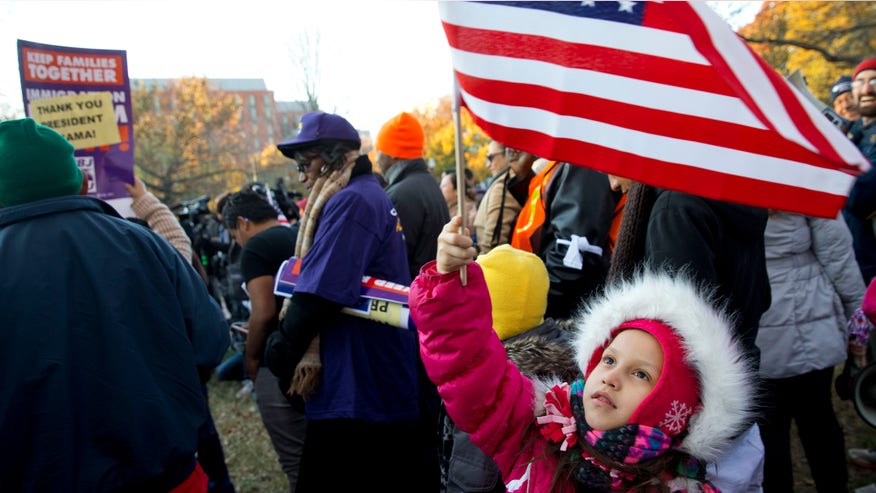
Posted onDecember 1, 2022|Comments Off on Traffickers Exploit Illegal Child Labor With Social Security Fraud; Minor Forced to Pay Back ‘Debt’ (Video)
Underage Migrant: ‘I Started Working’ to Pay Cartel Debt … ‘I Cannot Work Legally Here’ Frander, Male Migrant: “I cannot work legally here…It’s a small piece of paper that you get to be able to apply for jobs. A social security [card]. You just call the person, and he comes to your home and brings it.”
Comments Off on Traffickers Exploit Illegal Child Labor With Social Security Fraud; Minor Forced to Pay Back ‘Debt’ (Video)
Posted onMay 15, 2017|Comments Off on Former judge caught in mega-million-dollar Social Security fraud scheme
The scheme resulted in Conn receiving at least $7.1 million in representative fees from the SSA, and Daugherty obligating the SSA to pay in excess of $550 million in lifetime benefits to claimants.
A former administrative law judge for the Social Security Administration (SSA) pleaded guilty Friday for participating in a scheme to fraudulently collect more than $550 million in federal disability payments from the SSA for thousands of claimants.
David Black Daugherty, 81, of Myrtle Beach, South Carolina, pleaded guilty in federal court to two counts of receiving illegal gratuities. Sentencing is scheduled for Aug. 25, 2017.
As an administrative law judge at the Social Security hearing office in Huntington, West Virginia (Huntington Hearing Office) for more than 20 years, Daugherty’s primary role was to adjudicate disability claims on behalf of the SSA.
From November 2004 to April 2011, Daugherty collected over $609,000 in cash payments in approximately 3,100 cases from Social Security disability lawyer, Eric Christopher Conn, of Pikeville, Kentucky, for ordering disability benefits for claimants represented by Conn. Daugherty divided cash deposits into several bank branches and accounts in an attempt to conceal the source of the payments.
Posted onJanuary 17, 2017|Comments Off on Beneficiaries of Entitlement Programs Skyrocked Under Obama (Video)
Beneficiaries of entitlement programs such as Medicaid, Medicare, Social Security, and food stamps greatly increased under the Obama administration, adding billions to the nation’s debt.
A recent report says the Supplemental Nutrition Assistance Program, a food stamps program, costs taxpayers $70,866,830,000 in 2016. Under the Obama administration, the number of people using food stamps went from 33,490,000 to 44,219,000.
The number Medicaid beneficiaries went from 60,880,000 in 2009, to 74,059,221 in 2016.
“Historically, Medicaid eligibility has generally been limited to low-income children, pregnant women, parents of dependent children, the elderly, and individuals with disabilities,” said the Congressional Research Service (CRS).
But this changed under the Obama administration. The organization went on to say, “However, the Patient Protection and Affordable Care Act (Obamacare) included the ACA Medicaid expansion, which expands Medicaid eligibility to individuals under the age of 65 with income up to 133% of the federal poverty level at state option.”
Posted onSeptember 16, 2015|Comments Off on Social Security Administration Confirms: Illegal Aliens To Begin Collecting Benefits In 2017
The amnesty crowd’s biggest swindle has already been exposed as a ridiculous lie: the illegals aren’t going to be paying any “back taxes” to “earn” their citizenship. They’re going to be able to collect money from the IRS through tax credits, up to $35,000 apiece.
I’m old enough to remember when amnesty shills were promising that illegal aliens would become a fabulous source of tax revenue as soon as they were legalized.
We were sternly commanded to ignore all those studies showing the legalized alien population would be a staggering drain on our immense welfare state. The authors of such studies were torn to shreds for their alleged short-sightedness and xenophobia.
The amnesty shills, who spent years telling us illegal aliens were a poor and oppressed minority eking out a sparse existence from predatory employers while living miserably “in the shadows,” have recently spun on a dime and said to forget all that jive and believe their new party line that these “Americans-in-waiting” are far more productive than existing American citizens, including the chumps who waited in line for years to immigrate properly. Jeb Bush, to name a prominent example, often speaks as if he considers illegals qualitatively superior to Americans in their sense of family responsibility and work ethic, gingerly leaving the subject of their respect for the law to discuss another day.
Posted onAugust 1, 2015|Comments Off on Social Security Administration Confirms: Illegal Aliens To Begin Collecting Benefits In 2017
The amnesty crowd’s biggest swindle has already been exposed as a ridiculous lie: the illegals aren’t going to be paying any “back taxes” to “earn” their citizenship. They’re going to be able to collect money from the IRS through tax credits, up to $35,000 apiece. Now the Social Security Administration has confirmed that amnestied aliens will be able to collect benefits from it as well, as early as 2017.
I’m old enough to remember when amnesty shills were promising that illegal aliens would become a fabulous source of tax revenue as soon as they were legalized.
We were sternly commanded to ignore all those studies showing the legalized alien population would be a staggering drain on our immense welfare state. The authors of such studies were torn to shreds for their alleged short-sightedness and xenophobia.
The amnesty shills, who spent years telling us illegal aliens were a poor and oppressed minority eking out a sparse existence from predatory employers while living miserably “in the shadows,” have recently spun on a dime and said to forget all that jive and believe their new party line that these “Americans-in-waiting” are far more productive than existing American citizens, including the chumps who waited in line for years to immigrate properly. Jeb Bush, to name a prominent example, often speaks as if he considers illegals qualitatively superior to Americans in their sense of family responsibility and work ethic, gingerly leaving the subject of their respect for the law to discuss another day.
Posted onMay 9, 2015|Comments Off on Social Security insolvent sooner than expected
‘Inherent bias’ creates rosy forecasts that seriously overstate system’s health.
A new study has revealed “biased” forecasts by the U.S. Social Security Administration, suggesting the health of the system millions of Americans are depending on for their retirement is seriously overstated.
The study was published Friday in the Journal of Economic Perspectives, co-authored by Harvard Professor Gary King, a Ph.D. student at Harvard’s Institute for Quantitative Social Science; and an assistant professor at the Dartmouth Institute for Health Policy & Clinical Practice.
“Pretty much everybody who evaluates Social Security realizes there’s a problem … But the system is in significantly worse shape than their forecasts are indicating,” King told the Harvard Gazette.
Posted onDecember 10, 2014|Comments Off on Illegal immigrants to be eligible for Social Security, Medicare
Stephen Miller, a spokesman for Sen. Jeff Sessions of Alabama, a leading Republican opponent of Obama’s executive actions, said making immigrants illegally in the U.S. eligible for Social Security and Medicare “is an attack on working families.”
Illegal immigrants who apply for work permits in the U.S. under President Obama’s new executive actions will be eligible for Social Security and Medicare, the White House says.
Under the sweeping actions, immigrants who are spared deportation could obtain work permits and a Social Security number, which would allow them to pay into the Social Security system through payroll taxes.
No such “lawfully present” immigrant, however, would be immediately entitled to the benefits because like all Social Security and Medicare recipients they would have to work 10 years to become eligible for retirement payments and health care. To remain qualified, either Congress or future administrations would have to extend Obama’s actions so that those immigrants would still be considered lawfully present in the country.
The White House wanted Treasury Secretary Timothy Geithner to lie on Sunday talk shows to downplay the part Social Security played in driving the deficit, it was revealed today.
Geithner writes in his memoir Stress Test, out today, that the White House communications director asked him to downplay the long term cost of Social Security spending to mollify the Democratic Party’s base.
‘I remember during one Roosevelt Room prep session before I appeared on the Sunday shows, I objected when Dan Pfeiffer wanted me to say Social Security didn’t contribute to the deficit. It wasn’t a main driver of our future deficits, but it did contribute,’ he says.
‘Pfeiffer said the line was a ‘dog whistle’ to the left, a phrase I had never heard before. He had to explain that the phrase was code to the Democratic base, signaling that we intended to protect Social Security.’
Obviously I’m never going to see the money I’m paying into Social Security, but then again no one is because politicians have been raiding it all along to fund their latest social justice projects.
Finally a liberal comes up with a sensible compromise that can bring Republicans and Democrats together. The Dems will offer to cut benefits for the elderly and the Repubs will agree to high taxes and open borders.
What’s not to like about this amazing Washington Post mediated compromise?
“What’s needed is a bargain in which Democrats trim retiree benefits (Social Security and Medicare) and, in exchange, Republicans deal forthrightly on immigration and taxes.”
Come on guys, we’ll help you push grandma off the cliff and you turn America into Mexico and raise taxes to pay for the glut of social services that our new Mexifornians will need.
How can you say no? Did you hear that liberals are throwing in dead grandmas into the bargain?
America is changing Robert Samuelson says.
In 1960, 85 percent of Americans were white and 10 percent were black. Now, 63 percent are white, 13 percent black, 17 percent Hispanic and 5?percent Asian. In 2050, those shares are projected to be 47 percent white, 13 percent black, 28 percent Hispanic and 8 percent Asian.
Second, family breakdown. In 2011, unmarried women accounted for 41 percent of U.S. births, up from 5 percent in 1960. The trend affects all major groups. The rate is 29 percent for whites, 53 percent among Hispanics and 72?percent among African Americans.
Many people speculate as to the cause of the Roman Empires fall But, this is quite a taboo suggestion: what if Mass Migration drove it? Recent genetic studies on Roman corpses has opened up this scary thought