Category Archives: Infrastructure

May 17, 2013

Poll: Conservative Support for Marco Rubio Plummets

The latest Public Policy Polling data bears sobering news for Senator Marco Rubio, showing his support among conservatives has substantially decreased since last month.

When asked for their preferred GOP candidate, only 17% of “very conservative” respondents favored Rubio, while only 18% of “somewhat conservative” respondents favored Rubio.

This is a steep decline from the same poll’s findings in April, when Rubio’s support was 26% among the“very conservative” and 22% among the “somewhat conservative.”

The survey was conducted between May 6–9th. The survey released in April was conducted between March 27–30th. The “Gang of 8″ bill, spearheaded by Senator Rubio, was released April 17th.

[...]

Complete text linked here.


March 7, 2013

Too Much Money Spent in Iraq for Too Few Results

To date, the U.S. has spent more than $60 billion in reconstruction grants to help Iraq get back on its feet after the country that has been broken by more than two decades of war, sanctions and dictatorship. That works out to about $15 million a day.

Ten years and $60 billion in American taxpayer funds later, Iraq is still so unstable and broken that even its leaders question whether U.S. efforts to rebuild the war-torn nation were worth the cost.

In his final report to Congress, Special Inspector General for Iraq Reconstruction Stuart Bowen’s conclusion was all too clear: Since the invasion a decade ago this month, the U.S. has spent too much money in Iraq for too few results.

The reconstruction effort “grew to a size much larger than was ever anticipated,” Bowen told The Associated Press in a preview of his last audit of U.S. funds spent in Iraq, to be released Wednesday. “Not enough was accomplished for the size of the funds expended.”

In interviews with Bowen, Prime Minister Nouri al-Maliki said the U.S. funding “could have brought great change in Iraq” but fell short too often. “There was misspending of money,” said al-Maliki, a Shiite Muslim whose sect makes up about 60 percent of Iraq’s population.

Iraqi Parliament Speaker Osama al-Nujaifi, the country’s top Sunni Muslim official, told auditors that the rebuilding efforts “had unfavorable outcomes in general.”

“You think if you throw money at a problem, you can fix it,” Kurdish government official Qubad Talabani, son of Iraqi president Jalal Talabani, told auditors. “It was just not strategic thinking.”

[...]

Complete text linked here.


February 17, 2013

Left In The Dark: Copper Thieves Rob Detroit Freeways Of Light

The freeway isn’t the only area in Detroit where there’s a lack of light. About half of the city’s roughly 88,000 street lamps are in disrepair.

The Michigan Department of Transportation says one-fifth of the lights along freeways in Metro Detroit aren’t working — and copper thieves are mainly to blame.

MDOT spokesman Rob Morosi said roughly 20 percent of the lights on poles and beneath overpasses on freeways in Wayne, Oakland, Macomb and St. Clair counties are dark.

“We are responsible for about 5,500 light poles and also about 5,000 individual lights that are installed beneath overpasses,” Morosi told The Detroit News. “Right now we’re estimating 1,100 outages to those poles for a number of reasons.”

The main reason for many of the outages, according to Morosi, is copper thieves – who are stripping metal from the transformer cabinets.

“It’s not like the copper thieves are running out onto the freeway and stealing copper from the poles to sell at scrap yards,” Morosi said. “Instead they are attacking the transformer cabinets, many of which are actually located on the service drives.”

MDOT has identified the area around I-94, east of I-75, as one of the worst hit by thieves.

“We are taking measures to try to keep the cabinets safe and secure, but for every move we make, the thieves come up with a counter-move,” said Morosi.

[...]

Complete text linked here.


October 9, 2012

Corruption Is Seen as a Drain on Italy’s South

In Italy, misuse of European money “did tremendous damage because the funds were used badly and, as some magistrates say, they also fed organized crime,” said Sergio Rizzo, a co-author of best-selling books about political corruption.

Italy’s A3 highway, begun in the 1960s and still not finished, starts outside Naples in the ancient hill town of Salerno and ends, rather unceremoniously, 300 miles farther south as a local street in downtown Reggio Calabria.

Along the way, it frequently narrows to two lanes, with an obstacle course of construction sites that have lingered for decades. Perilous, two-lane bridges span mountain ravines high above the sea, while unlit tunnels leak in the rain — and occasionally drop concrete and other building materials onto passing cars.

Nothing embodies the failures of the Italian state more neatly than the highway from Salerno to Reggio Calabria. Critics see it as the rotten fruit of a jobs-for-votes culture that, nurtured by the organized crime that is endemic in southern Italy, has systematically defrauded the state while failing its citizens, leaving Calabria geographically and economically isolated.

The highway is also a symbol of what some Northern European countries say they fear the most about the euro zone: its development into a welfare system in which they are expected to support a sluggish Southern Europe, where grants and subsidies too often vanish in graft that the governments appear unable — or unwilling — to prevent. And it helps illustrate how the financing has yielded relatively little of the productive investment that might now be helping Southern Europe as it tries to climb out of an economic ditch.

[...]

Complete text linked here.


August 18, 2012

There Is No California by Victor Davis Hanson

How to explain the seemingly inexplicable? “California” is a misnomer. There is no such state. Instead there are two radically different cultures and landscapes with little in common, the two equally dysfunctional in quite different ways. Apart they are unworldly; together, a disaster.


Palo Alto and Fresno share a state government, but that’s about it.

Driving across California is like going from Mississippi to Massachusetts without ever crossing a state line.

Consider the disconnects: California’s combined income and sales taxes are among the nation’s highest, but the state’s annual deficit is still about $16 billion. It is estimated that more than 2,000 upper-income Californians are leaving per week to flee high taxes and costly regulations, yet the state government wants to raise taxes even higher. California’s business climate already ranks near the bottom in most surveys. Its teachers are among the highest paid, on average, in the nation, but its public-school students consistently test near the bottom of the nation in both math and science.

The state’s public employees enjoy some of the nation’s most generous pensions and benefits, but California’s retirement systems are underfunded by about $300 billion. The state’s gas taxes — at over 49 cents per gallon — are among the highest in the nation, but its once-unmatched freeways, like 101 and 99, for long stretches have degenerated into potholed, clogged nightmares unchanged since the early 1960s.

The state wishes to borrow billions of dollars to develop high-speed rail, beginning with a little-traveled link between Fresno and Corcoran — a corridor already served by money-losing Amtrak. Apparently, coastal residents like the idea of European-style high-speed rail — as long as the noisy and dirty construction does not begin in their backyards.

[...]

Complete text linked here.


August 4, 2012

California: The Road Warrior Is Here by Victor Davis Hanson

Protection is found only in self-help. To stop the Road Warriors from stripping the copper cable from your pump or the community’s street lights, civilization is encouraged to put in a video camera, more lighting, more encasement, a wire protective mesh — all based on the premise that the authorities cannot stop the thieves and your livelihood is predicated on the ingenuity of your own counter-terrorism protocols.

Pre- and Post-Modern

I am writing tonight in Palo Alto after walking among nondescript 1,500 square-foot cottages of seventy-year vintage that sell for about $1.5-2 million and would go in a similar tree-shaded district in Fresno or Merced for about $100,000. Apparently, these coastal Californians want to be near Stanford and big money in Silicon Valley. They also must like the fact that they are safe to jog or ride bikes in skimpy attire and the general notion that there is “culture” here amid mild weather. I suppose when a car pulls out in front of you and hits your bumper on University Avenue, the driver has a license, registration, and insurance — and this is worth the extra million to live here. My young fellow apartment residents like to jog in swimming suits; they would last one nanosecond doing that on De Wolf Avenue outside Selma.

Survival?

Meanwhile, 200 miles and a world away, here are some of the concerns recently in the Valley. There is now an epidemic of theft from tarped homes undergoing fumigation. Apparently as professionals tent over homes infested with termites, gangs move into the temporarily abandoned houses to burrow under the tarps and loot the premises — convinced that the dangers of lingering poisonous gas are outweighed by the chance of easy loot. Who sues whom when the gangbanger prying into the closet is found gassed ? When I get termites, I spot treat myself with drill and canisters; even the professional services warn that they can kill off natural pests, but not keep out human ones.

No one in the Central Valley believes that they can stop the epidemic of looting copper wire. I know the local Masonic Hall is not the Parthenon, but you get the picture of our modern Turks prying off the lead seals of the building clamps of classical temples.

[...]

Complete text linked here.


Washington Post: Blackouts Like India’s Could Become Common in US

When workers were fixing equipment at a utility switchyard in Arizona, a mishap knocked out power for much of southern California, according to The Post. In the largest power outage in California history, schools closed, traffic lights went out and gridlock followed. And people were in elevators.

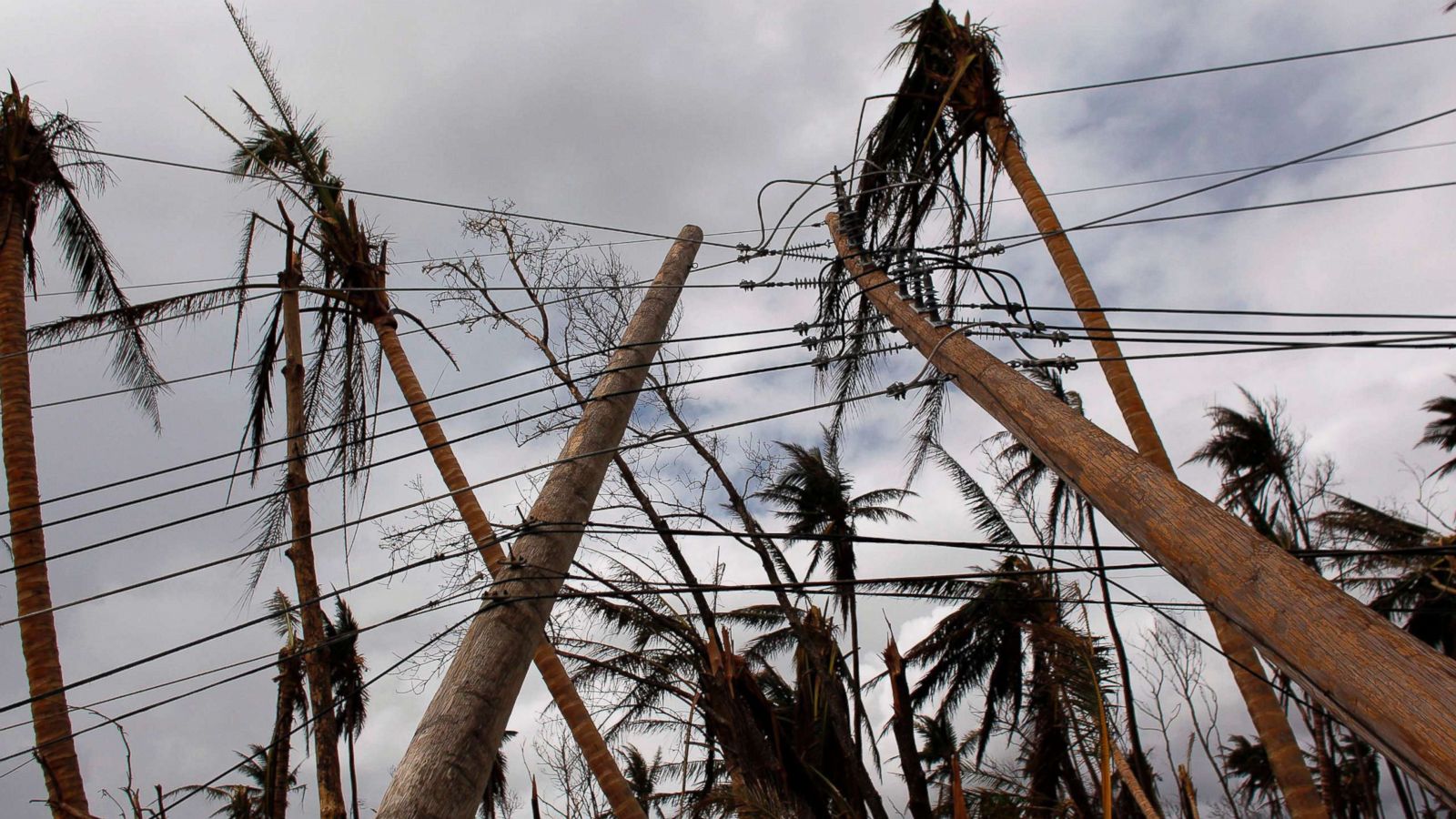
An aging and overtaxed U.S. power grid could mean blackouts will become more common, according to The Washington Post.

As the electrical system ages, it becomes more vulnerable to storms and other natural disasters. Plus, the grid is under increasing strain from growing electricity use, as people use more computers and charge their cell phones and other devices.

If transmission lines or stations in one area break down, other parts of the grid assume a greater burden and may, in turn, break down, creating a cascading disaster that threatens the entire system, The Post explains.

Half of India, more than 600 million people, lost power when the country’s grid collapsed earlier this week. Although a break down of that magnitude isn’t immediately likely in this country, experts warn blackouts and brownouts would become more common here without a substantial upgrade of our electrical grid, according to The Post.

And that would be expensive. The American Society of Civil Engineers estimates that an extra $107 billion is needed by 2020 to keep the grid running.

[...]

Complete text linked here.


August 3, 2012

Abandoned Motor City is turning into a dump – literally

In December, the corpses of two women were found in a car left near an abandoned house. A week later, the charred remains of two other women were discovered in the trunk of another car. Police say all of them were murdered elsewhere, then brought to Detroit for disposal.


A stuffed animal on the ground at the Packard Automotive Plant a former car manufacturing factory in Detroit, Michigan

With hundreds of thousands having fled Detroit in the last decade alone, the city is turning into a deserted dumping ground for murder victims. And with its budget choked, the Motor City has had to cut back on its police force to boot.

­A report published Thursday by the Associated Press tells of two bodies decomposing in an empty Detroit lot littered with tires and furniture. The teenage boys had been stripped to their underwear, shot, and then left to rot on one of the city’s many abandoned, formerly residential blocks.

They were only the latest in a string of murder victims whose remains lay for days before being discovered. Detroit has become a kind of agglomeration of rural patches contained inside an urban area, where what were once neighborhoods have turned into overgrown fields.

Outsiders – and police – are unlikely to visit the inner wasteland of what some Americans now call the Murder City.

The situation is a result of nearly fifty years of decay, after white residents started making their way to the suburbs in the 1950s. And after a vicious race riot in 1967, their mass relocation picked up in earnest.

Over the next two decades, the city’s black middle class followed, and blocks – sometimes neighborhoods – of empty houses and overgrown lawns are all that remain today.

[...]

Complete text linked here.


July 8, 2012

U.S. infrastructure for sale to foreigners

What kind of experience can U.S. citizens expect when infrastructure ranging from toll roads to water departments to prisons to public schools are leased by foreign investment concerns and placed under foreign management?

State, local officials gathering for seminar to learn ‘how-to’

EuroMoney Seminars, a UK-based company, is holding a seminar to teach state and local government officials in the U.S. how to lease a wide range of public assets – ranging from highways to water departments – to international and foreign private investment groups.

The event, entitled “PPP: The North American Private Partnerships Intensive Seminar,” will be held at the Hyatt Regency in Miami March 19 to 21. The cost will be $3,500 per attendee.

A spokesman for EuroMoney Seminars in the UK told WND the target audience was government employees at the state and local level who want to learn the “how-to” of putting together deals such as the one by Cintra Concesiones de Infraestructuras de Transporte to finance the Trans-Texas Corridor.

The EuroMoney Seminars spokesman talked with WND on background, complying with EuroMoney Seminars policy that spokesmen not be named in news stories.

In its first mailing for the March PPP conference in Miami, EuroMoney Seminars targeted bureaucrats from the state departments of transportation. The group plans to limit the number of attendees to 50.

[...]

Complete text linked here.


July 6, 2012

The American Empire Is Over & The Descent Is Going To Be Horrifying! (Video)

The next President of the United States will be a minion of Goldman Sachs. Many Americas stood up against the tyranny but in the end were betrayed by their unthinking or cowardly brothers. The elite took that as a message that the rape of the nation could continue. The next round of Bailouts for the Elites will be unopposed.

“The warning signs are there. We are following the trajectory of all empires which is that they expand beyond their capacity to sustain themselves . We have run up the largest deficits in human history. The bottom line is we can’t repay it. We have done so at the cost of our infrastructure, public education, our working class, our “hollowing out” our country from the inside, and the physical evidence is all around us.” Chris Hedges